
Tag Archives: DaveMan

Comical Ironies of the “Forever Wars”


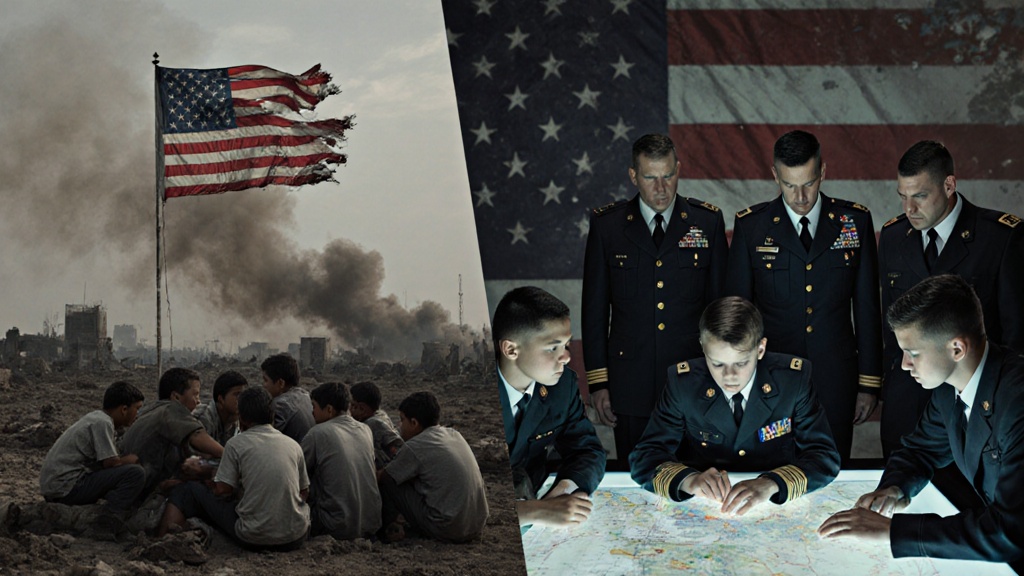
If alien anthropologists ever visited Earth and read our headlines, they’d probably assume that global leaders are part of an elaborate satire––a long-running tragicomedy where powerful adults reenact sandbox fights with billion-dollar toys.

Because when you strip away the flags, the speeches, and the “historic” crisis meetings, there’s a painfully simple truth beneath nearly every modern conflict: the problems could be solved, the harm could be stopped, and the suffering could end—if the people in the room actually wanted it to.

Instead, the world watches a rotating cast of leaders insist they are “doing everything possible” while demonstrably avoiding the one thing that works: sitting down, acting like adults, and choosing peace instead of ego.

The irony?
Children do this better.

Put two kids in a sandbox. One steals the shovel. The other cries. Maybe there’s shouting. Maybe there’s pushing. But give them five minutes—and one teacher with basic emotional intelligence—and somehow, magically, the world’s smallest diplomats figure out:

  • “Hey… we can take turns.”
  • “Maybe we can build something together.”
  • “Sorry I threw sand at you.”
  • “Wanna be on my team?”

Meanwhile, the adults running countries—educated, powerful, well-advised—can’t negotiate anything half as logical as a kindergarten compromise.

And here’s where the cosmic comedy becomes unavoidable:

1. The People With the Least to Lose – Children – Are the Best at Resolving Conflict.

They don’t cling to grudges to preserve their “legacy.”
They don’t have weapons manufacturers whispering over their shoulders.
They just want to play.

2. The People With the Most to Lose – Leaders – Behave Like the Least Mature Humans in the Room.

Every war becomes a battle of egos wrapped in flags, with civilians used as emotional bargaining chips.
It’s astonishing how quickly “national security” becomes code for “I refuse to admit I was wrong.”

3. War Is Treated Like Weather—As if It Just ‘Happens.’

Leaders act shocked—shocked!—that violence escalates when they fund it, arm it, fuel it, and justify it daily.
It’s like someone dumping gasoline on a barbecue and then holding a press conference about the “unexpected fire.”

4. Peace Is Always the ‘Last Resort,’ Not the First.

In politics, peace is treated like the emergency fire extinguisher behind glass:
In case of total disaster, break glass—after we’ve tried everything that guarantees disaster.

And all the while, ordinary people—across borders, languages, and cultures—universally agree on one thing: war is stupid.
Everyone knows it.
Most leaders won’t say it.
But children would scream it.

Imagine a five-year-old observing a modern war room:
“Wait… you can talk to each other but don’t want to?
You’re sharing a planet but don’t want to share a city?
You’re grown-ups but can’t agree who gets the shovel?”

If the world ran on playground diplomacy instead of political theater, most wars would end before recess.

The irony is this:
War continues not because it’s complicated, but because too many adults in power lack the honesty, humility, and emotional maturity of a child.

And until the world demands that its leaders grow up—
or step aside for the children who actually know how to share—
we’ll keep watching this absurd, avoidable cycle repeat.

A global tragedy, wrapped in comical irony, powered entirely by adults who should never have been trusted with the sandbox in the first place.

Nicholas J. Fuentes | If you don’t know, well now you will…

For over a decade, Nicholas J. Fuentes has been a lightning rod in American political discourse — loved by some, despised by others, and, until recently, nearly erased from public view by one of the most aggressive campaigns of censorship in modern political history. Branded with every label the media’s dartboard could hold, from “extremist” to “dangerous,” Fuentes’ voice was pushed to the fringes — not because his arguments were weak, but because they were inconvenient. Yet, in the age of long-form conversation, where sound bites can’t be weaponized as easily, a growing audience is discovering that the man behind the caricature is far more complex, articulate, and frankly, entertaining than his detractors would ever admit.

Fuentes calls his philosophy the “True America First” — a phrase that, in his telling, isn’t just a slogan but a political reality check. His argument is simple: if America doesn’t actually prioritize the well-being, sovereignty, and cultural continuity of its own people, then “America First” is just another bumper sticker. Over the years, his bluntness has earned him not only a devoted following but also the full glare of institutional power. Social media bans, de-banking, conference blacklisting — you name it, it’s been thrown at him. The irony, of course, is that this very censorship has only amplified the curiosity around him. After all, nothing says “this person might be on to something” quite like an entire system trying to make sure you never hear from them.

What’s new is the how of Fuentes’ resurgence. No longer just the boogeyman whispered about on cable news, he’s reclaiming his own narrative by showing up in the only arena where legacy media has no control: the open internet, long-form podcasts, and uncensored platforms. Here, without a hostile interviewer cutting him off every 30 seconds, he’s able to unpack his worldview, point by point — and whether you agree or disagree, you have to admit, the man knows how to hold a room. It’s political debate mixed with sharp humor, a style that makes his harshest critiques go down with the sting of truth and the occasional laugh.

But his most eyebrow-raising move of late has been turning his sights on someone most of his audience once thought untouchable: Tucker Carlson. Tucker, America’s cable news golden boy turned independent media powerhouse, has been a fixture in right-leaning households for years. Yet, Fuentes recently floated the idea that Tucker’s meteoric rise — and certain editorial choices — might not be entirely organic. If Fuentes is correct, Carlson could be operating, knowingly or not, in tandem with American intelligence interests. It’s the kind of suggestion that makes you either roll your eyes or start nervously rewatching old episodes to look for clues.

Whether Fuentes’ take on Tucker proves right or wrong, one thing is undeniable: Nick’s return to the public square is shaking up the conversation. The establishment’s preferred method of dealing with inconvenient voices — silence them and hope people forget — clearly didn’t work here. If anything, they’ve helped create a figure who now commands more attention than ever, with an audience hungry for exactly the kind of unfiltered political commentary he delivers. Love him, hate him, or fear him, Nicholas J. Fuentes is a reminder that in America, ideas have a funny way of surviving even the most determined attempts to bury them — sometimes coming back louder, sharper, and with better punchlines.